Contrasting Two Online Game Economies
Contrasting Two Online Game Economies[edit]
FIFA Infinity: Ultimate Team’s Economy Compared to Tarkov’s Market
https://i.postimg.cc/mDrCtyK0/fut-trading.jpg
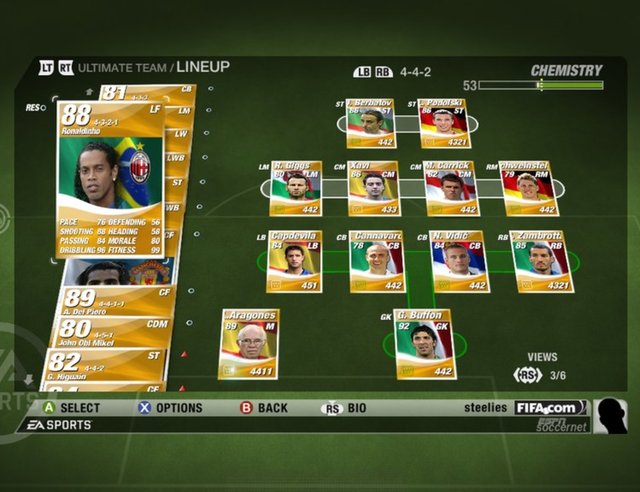
Exploring Two Different Digital Trading Models
Modern online gaming involves more than just playing matches. Digital trading systems have become central to how players engage. Among the most discussed examples are Tarkov’s Market vs. Ultimate Team’s Economy, two models which function in unique ways. Should you need Two Very Different Digital Trading Systems at this link you will find more detailed information!!
What Job Are Players Trying to Get Done?
https://i.postimg.cc/FHQSj42b/fc24-ultimate-team-trading-guide.jpg
Striving for Progress and Status
• Ultimate Team (as featured on FIFA Infinity): Gamers aim to collect and build the strongest squad. The economy supports fast upgrades and visible prestige. • Escape from Tarkov Flea Market: Here the focus is survival. The market supports careful preparation for raids.
Managing Pace of Advancement
• Ultimate Team: Easy to access, simple transactions, fast pace. • Tarkov’s Market: Complex, risky, and scarcity-driven.
Ultimate Team vs. Tarkov in Detail
1. FIFA Infinity’s Marketplace:
• Prices react to live football results.
• Open and inclusive for all types of players. Motivates pack purchases and reinvestment.
2. Escape from Tarkov’s economy:
• Anchored in tactical survival.
• Focuses on depth and strategy.
• Mirrors real economic pressure.
Insights for Players and Developers
https://i.postimg.cc/vm06F6DX/image.jpg
For Players
For fast progress and football passion, FUT is ideal. Players seeking realism thrive in Tarkov’s system.
For Developers
Ultimate Team demonstrates how to align games with external events. Tarkov shows that difficulty and scarcity increase depth.
Closing Perspective
Analyzing Ultimate Team’s Economy vs. Tarkov’s Market highlights two contrasting approaches to virtual economies. One favors casual accessibility, the other rewards hardcore strategy. Both examples show that successful virtual economies reflect what players truly want.